
A PROCESS…
thoughts on approach…
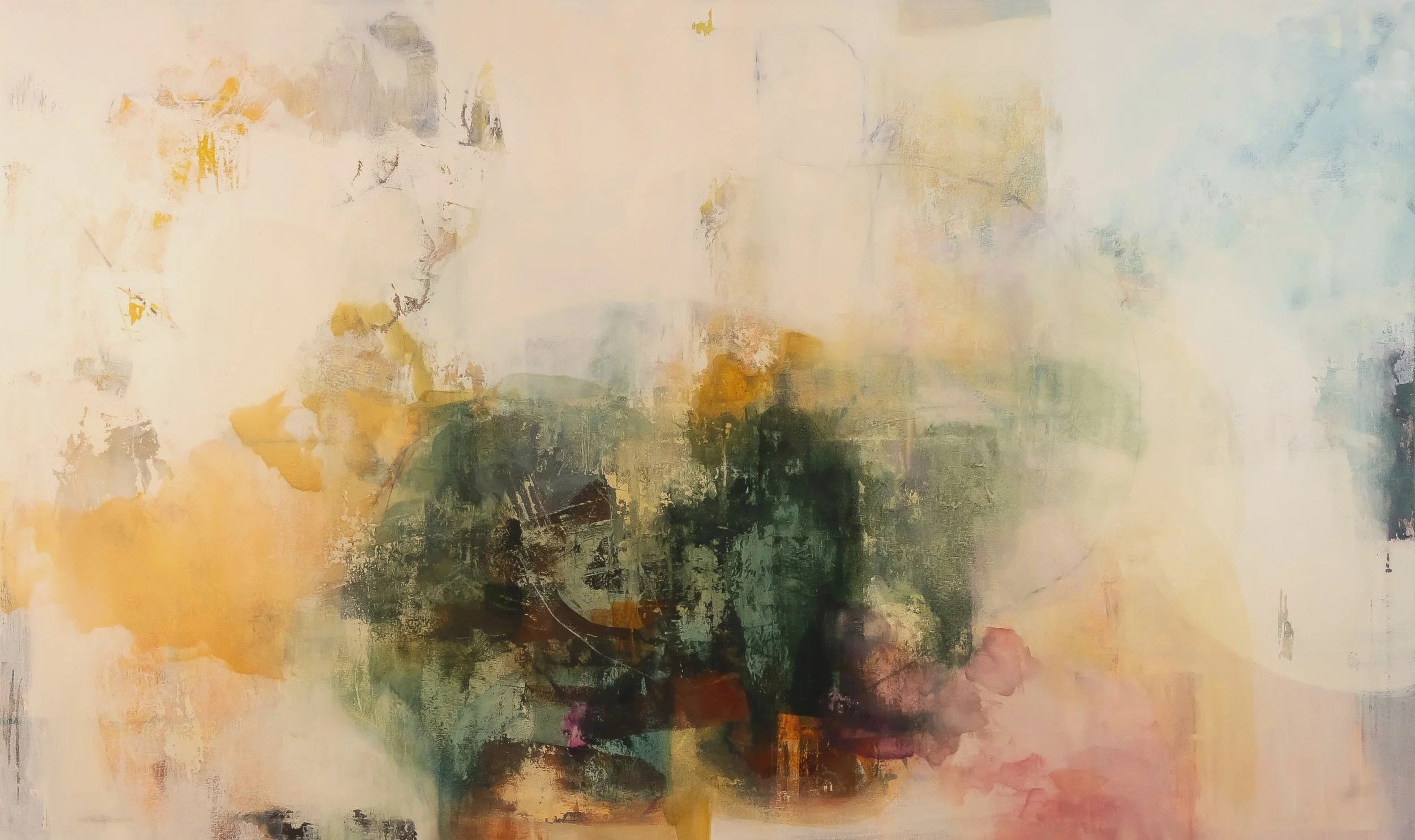
For my work to feel finished, it needs to remain in a state of flux — moving toward something, or away from something else. I’m drawn to surfaces that feel weathered and naturally imperfect. The wabi-sabi is what I’m after. It’s surprisingly difficult to create something that feels genuinely lived-in or slightly undone on purpose. Like a good pair of distressed jeans, the effect only looks effortless.
Even though each painting is a puzzle only I can solve, my approach to making them is fairly straightforward. I’m not interested in building an elaborate theory to prop the work up or make it seem more important than it is. It is what it is: paint on panel or paper. In the world we’re living in, how precious can that really be? In the larger scheme of things, it’s a luxury to make beautiful objects when so many people are struggling just to get by or fighting for something much more urgent.
I’m deeply grateful that this is what I get to do. I work almost every day, but I’m not a slave to it. If I want to spend a day exploring my new city, I do. If I want to linger over a long lunch with friends, I do. Still, the work doesn’t make itself. There’s discipline in showing up, in giving hours of uninterrupted attention, in returning again and again to the studio.
Like a cat, I do what I want.

INFLUENCE AND consistency…
I’ve always been slightly resistant to the idea that an artist must “find a style” and stay inside it forever. I understand the logic — galleries need the work to be recognizable, collectors need continuity — but I don’t think I’m built to make the same painting year after year. Growth has a way of insisting on itself. I’d love to wander into portraiture or still life or landscape now and then, but whenever I step too far outside abstraction, it tends to confuse people. So, for better or worse, I mostly stay in my lane — and try to keep that lane wide enough to keep moving.
By nature, I’m a sponge: a collector of textures, patterns, and colors, a keeper of visual memory. But I’m not someone who actively hunts for influence. Most of what shapes the work comes from simply showing up. There are left turns and surprises that only appear through the daily, unglamorous act of getting into the studio and doing the work — things that would never surface if I weren’t there consistently.
I’ve noticed that my work tends to shift whenever I change studios, though I can’t fully explain why. Some of it may be the disruption itself — after a move, it takes a while to find my footing again. But it could just as easily be the light, the weather, or the palette of a place. It’s probably not so different from how we all dress with the seasons: lighter, brighter when it’s warm; darker, heavier when it’s cold and damp. Atmosphere and location inevitably seep in — they inform the work, even if they don’t control it.
DOING The work…
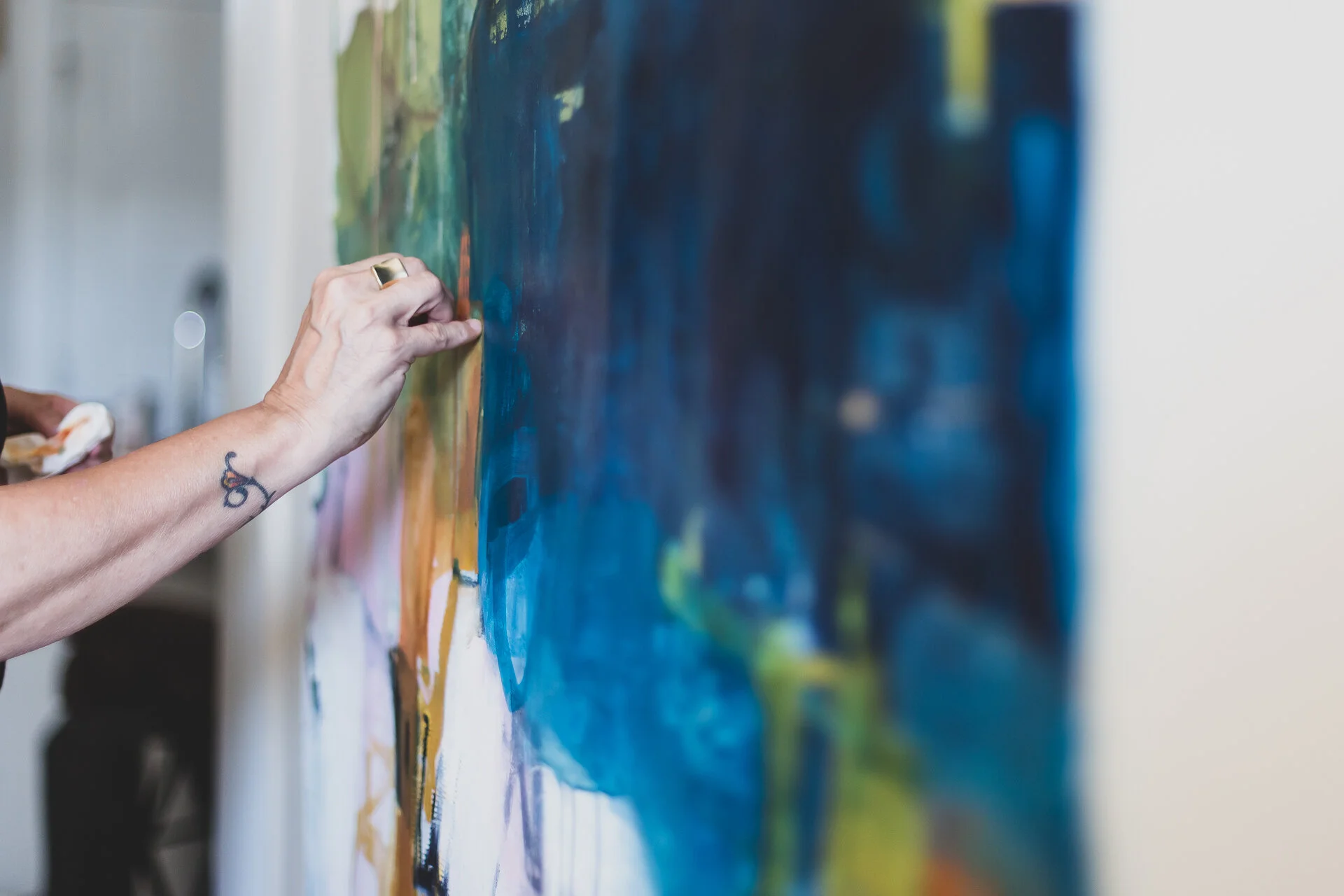
Most of the paintings I’m happiest with arrive quickly and spontaneously. Even so, I have to remind myself to slow down and let them develop over time. I edit until there’s enough ambiguity in the final surface to invite the viewer to wonder what’s happening beneath. Often the process begins with making something deliberately awkward or unresolved, then returning to it later to excavate and refine. For a painting to feel complete, it needs a sense of history — layers, revisions, traces of what came before. Anything that lingers in my studio long enough will almost certainly be revisited. I rarely believe a painting is truly finished.
At some point, though, the work has to be released. I tend to think of it as a quiet agreement: it’s time for you to move on, so I’ll give you a title and send you out into the world. Without deadlines, I’d probably keep working on the same pieces for years. Reality doesn’t allow for that kind of luxury. Even so, when work returns to me after a show, changes sometimes happen. And when I see older pieces living in collectors’ homes, I occasionally wish I could step back in and edit them — the way you look at old photographs and wonder “what was I thinking?”
——————————————————————--
I’m working in a shared studio again now, and I like the gentle tension between solitude and community. There’s something grounding about being surrounded by other people quietly making their own work, even when we’re each deep in our own worlds. The conversations happen when they’re useful, and otherwise we leave each other to the work. In the end, most of the real negotiations still happen privately, between me and the painting. Like most artists, I remain my own most persistent critic.


For my latest works, follow me on my Instagram account, or contact me to discuss commissioning an original piece.